
Business Acquisition Loan Broker Australia: Structuring Funding
Acquiring an existing business is fundamentally different from starting one. Yet many Australian buyers approach finance with a startup mindset, focusing on interest rates rather than structural viability. When you seek funding to buy a business, the mix of assets determines which lenders will even look at your application, regardless of how competitive their advertised rates appear. A business acquisition loan broker in Australia doesn't just shop for price. They map the specific asset mix of goodwill, stock, plant and property against lender risk policies to work out who can actually settle the deal.
Key Takeaways
- Lender policy alignment with asset composition determines approval success more than headline interest rates for acquisition finance.
- Major banks frequently decline manufacturing acquisitions with high goodwill exposure that specialist commercial lenders can structure through split-security arrangements.
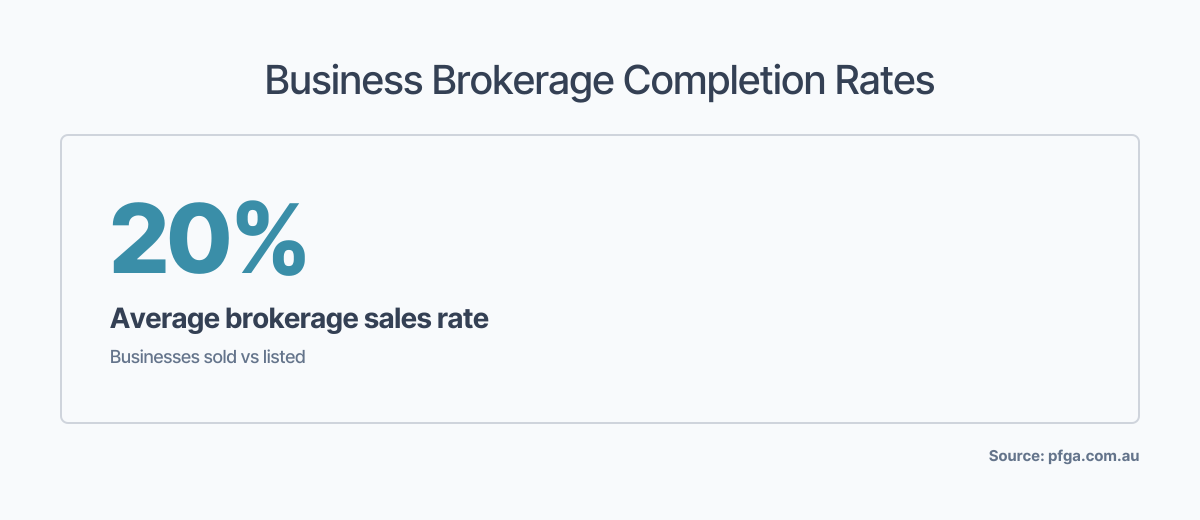
- Brokerages sell only about 20% of listed businesses on average, reflecting structural finance barriers that cause many transactions to collapse.
- Each formal credit enquiry from a declined application reduces future borrowing options by signalling increased risk to subsequent lenders.
- Assessing borrowing capacity against specific transaction structures before applying prevents wasted applications and protects credit files.
This matters because commercial lending isn't a commodity market where the cheapest option is available to everyone. Your borrowing capacity depends on how a lender values the specific assets you're acquiring, and whether their internal credit policy accommodates that particular blend of tangible and intangible value. Understanding these structural realities before you apply saves time, protects your credit file, and keeps you on finance pathways that match the reality of the transaction.
Structuring Finance for Buying an Existing Business Beyond the Headline Rate
The most common reason acquisition finance applications fail isn't poor credit history or insufficient income. It's a mismatch between the asset composition of the target business and the lending criteria of the chosen financier. When working out how to finance a business purchase, you need to recognise that lenders assess security through different lenses. What counts as acceptable collateral for one institution may be automatically excluded by another. That divergence often means approval depends on finding a lender whose risk appetite matches your specific transaction structure, even if their headline rate runs higher than a major bank's advertised offering.
Why Lender Policy Matters More Than Interest Rates for Approval
Here's a hypothetical, but representative, scenario: an Australian buyer is acquiring a manufacturing business for $2 million. The purchase price breaks down into $1.2 million of goodwill, $500,000 of older equipment and $300,000 of stock at valuation. The buyer has strong personal financials and approaches a major bank expecting pre-approval based on the business's historical profitability and their own deposit.
The bank declines the application. Its policy caps unsecured goodwill lending at $500,000 for this industry sector, and it assigns minimal security value to equipment over seven years old. Despite the buyer's strong position, the bank's automated servicing calculator can't support the debt against the security it recognises. The buyer has now lodged a formal enquiry that sits on their credit file, with no progress made toward settlement.
A specialist commercial lender can view the same transaction very differently. They may accept up to 70% of verified goodwill value for established manufacturing businesses, and assign residual security value to older equipment based on independent valuation rather than book depreciation schedules. By structuring the facility as a split-security arrangement, where real estate or director guarantees cover the goodwill component and chattel mortgages secure the equipment, they can fund the full $2 million purchase price. The interest rate might sit 1.5% to 2% above the major bank's variable rate, but the loan settles and the acquisition proceeds.
This is exactly why working with a business acquisition loan broker in Australia offers an advantage beyond rate comparison. We assess borrowing capacity against the specific transaction structure first, identifying which lenders can accommodate the actual asset mix before any formal application goes in. That prevents the damaging cycle of applying to unsuitable lenders, collecting declines, and then struggling to explain those enquiries to the next financier.
Finance for buying an existing business means matching three variables at once: the buyer's financial position, the target business's asset composition, and the lender's current risk parameters. These parameters shift regularly based on sector exposure, economic conditions and internal portfolio balance. A lender who funded manufacturing acquisitions aggressively six months ago may have since tightened goodwill caps due to portfolio concentration, while another may have recently expanded its appetite for exactly this type of transaction.
You can't discover these policy shifts by comparing advertised rates on aggregator websites or bank brochures. Those published figures represent best-case scenarios for ideal applicants with standard asset profiles. Your acquisition probably involves non-standard elements, such as aged receivables, leasehold improvements, intellectual property or vendor financing components, and these need assessment against live lending policies, not static marketing material.
Informed borrowing decisions start with understanding these structural realities, not submitting multiple blind applications and hoping one sticks. The cost of a declined application goes well beyond the immediate disappointment. Each enquiry becomes a data point that future lenders read as added risk, potentially narrowing your options by the time you find the right financing partner.
Navigating Acquisition Finance Lenders and Broker Success Realities
Business acquisitions are inherently complex, and completion rates reveal the gap between listing activity and settled deals. Brokerages, on average, sell only about 20% of the businesses they take on, highlighting the complexity of completing acquisitions. That figure reflects structural barriers that go beyond buyer motivation or seller expectations. Many potential transactions collapse because the parties can't agree on finance structures that satisfy both commercial viability and lender requirements.
The gap widens further at scale. Some of the biggest and best known brokers sell fewer than 5% of the businesses on their books, showing that high listing volumes don't guarantee transaction success. Lower conversion rates like these often turn up in larger, more complex transactions, where financing involves multiple security types, cross-collateralisation or valuation methods that sit outside mainstream lending parameters.
This is exactly why professional structuring matters more than ever for serious buyers. Many deals fail not because the business lacks merit or the buyer lacks commitment, but because the finance strategy rested on assumptions about lender flexibility that no longer hold. A buyer might assume their trading history qualifies them for standard business banking products, only to discover during due diligence that the target's customer concentration triggers an automatic decline at their preferred institution.
Engaging a specialist broker early acts as risk mitigation, not just convenience. We help clients explore multiple lending options and compare structures to understand their borrowing potential before submitting formal applications, so the finance pathway chosen can actually accommodate the transaction's specific characteristics. Compare that to the common pattern: find a business, sign a contract subject to finance, then discover during the conditional period that the available funding falls short of the purchase price.
Acquisition finance lenders sit across a spectrum, from conservative major banks to flexible private financiers, each occupying a distinct niche based on sector expertise, security preferences and deal size. A lender specialising in healthcare practices may offer strong terms for medical clinic acquisitions but decline manufacturing deals outright. Another may excel at funding hospitality venues on leasehold security but avoid freehold commercial property altogether. For example, a buyer acquiring a manufacturing business with high goodwill might face rejection from major banks, yet secure approval through a split-security structure with a non-bank lender. Working out which segment of the lending market fits your specific acquisition target takes current knowledge of individual lender mandates, not generic category information.
Your job as a buyer is to make informed decisions based on accurate intelligence about what's achievable, not to test the market through sequential applications. Each failed application narrows your options and sharpens the scrutiny applied to the next one. Professional guidance changes this dynamic by front-loading the assessment work, so viable pathways get identified before you commit to contractual obligations or lodge formal credit enquiries.
Securing Funding to Buy a Business Through Tailored Assessment
Business finance is rarely one-size-fits-all, and acquisition funding proves this more than any other commercial lending category. The difference between a successful settlement and a collapsed transaction often comes down to whether the finance structure was built around the specific asset mix, buyer profile and lender appetite relevant to that exact deal.
We don't guarantee approvals or promise specific outcomes. Every application remains subject to individual lender assessment and verification. What we do provide is an honest read on your borrowing capacity and a realistic view of which lending pathways suit your circumstances before you engage formally with any financier. This protects your credit file and makes sure you only spend time on applications with genuine prospects of success.
If you're researching funding to buy a business or sizing up acquisition targets, talking through your specific situation with us gives you clarity on feasible funding structures tailored to your financial position and the asset composition of prospective purchases. Rather than guessing which lender might approve your application or relying on outdated policy information, you get a clear read on what's achievable in the current lending environment.
Contact PFGA to discuss your acquisition objectives and get a personalised borrowing capacity assessment before submitting any lender applications.
Frequently Asked Questions
How does goodwill value affect my ability to get acquisition finance?
Goodwill is treated as an intangible asset with varying acceptance thresholds across lenders. Major banks typically cap unsecured goodwill lending at specific dollar amounts per sector, while specialist commercial lenders may accept higher percentages of verified goodwill value when supported by appropriate security structures or director guarantees.
Why would a non-bank lender approve a business purchase that a bank declined?
Non-bank lenders often have more flexible valuation methodologies for assets like aged equipment, leasehold improvements or industry-specific goodwill that fall outside standard bank policies. They may use split-security structures combining real estate, chattels and personal guarantees to accommodate asset mixes that trigger automatic declines under traditional banking criteria.
Should I get pre-approval before making an offer on a business?
Obtaining a borrowing capacity assessment before making offers prevents signing contracts subject to finance that you cannot subsequently satisfy. Pre-application assessment identifies which lenders can accommodate your specific transaction structure, allowing you to make confident offers with realistic settlement timelines rather than discovering funding gaps during conditional periods.
How many lender applications should I submit when seeking acquisition finance?
Submit only applications to lenders whose current policies demonstrably align with your transaction's asset composition and your financial profile. Multiple speculative applications create credit file enquiries that signal increased risk to subsequent lenders, potentially narrowing your options rather than expanding them.